The Future of Vieux Telegraphe
A Châteauneuf-du-Pape icon looks forward and back
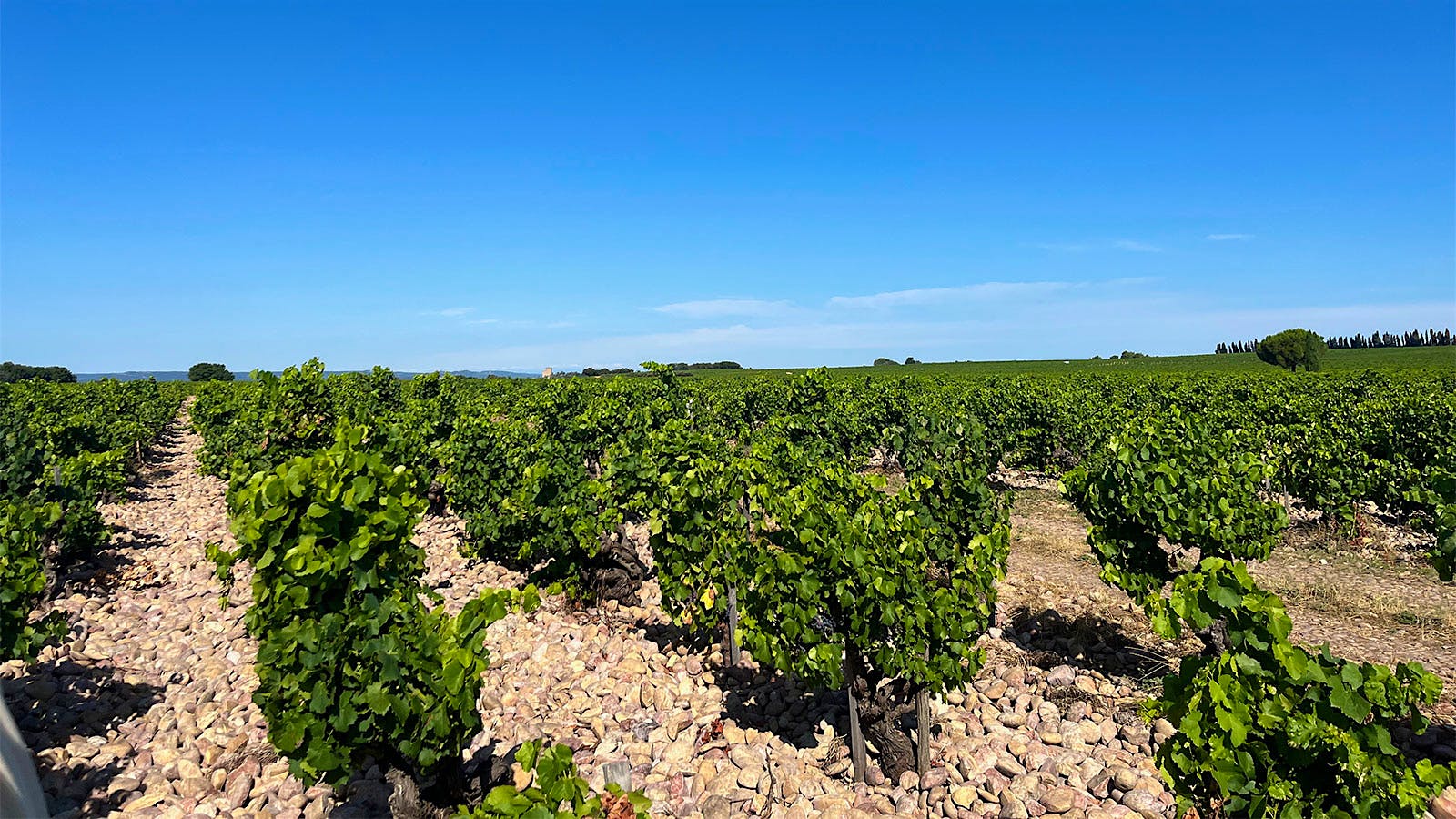
Daniel Brunier walks across a thick carpet of smooth, rounded stones in a vineyard planted by his grandfather with squat, gobelet-trained Grenache. Resembling small trees, the vines extend to a blue horizon.
“It’s important to know what you’ve done,” says Brunier, now in his 44th vintage at Châteauneuf-du-Pape’s iconic Domaine du Vieux Telegraphe, synonymous with its vineyards here on the La Crau plateau. “But it’s more important to know where you are going.”
“This,” he adds, “is really a long-term project.”
A focus on long-term planning coupled with a meticulous streak seems to be part of the Brunier DNA. In their sixth generation here, they’ve built one of the pillars of Châteauneuf-du-Pape quality with its own timeless, elegant style.
Their top cuvee, Vieux Telegraphe La Crau, is dominated by old Grenache, which is blended with Mourvèdre, Syrah and tiny amounts of other varieties permitted in the appellation. Here, the term “old vines” means an average age that’s greater than any living member of the family: 70 years.
Brunier points out another plot across a small dirt road. It’s Grenache that he and his brother Frederic planted in the early 1980s, shortly after they took over. Yet, it’s been considered too young and green to be blended into Vieux Telegraphe.
“It’s only now—this vintage—that we will consider using it in Vieux Telegraphe,” says Brunier. Until now, the grapes have been part of the estate’s second wine, Telegramme, composed of fruit from “young” La Crau vines and older vines from elsewhere in the appellation.
A light, cool, north wind kicks up—a tame dose of the potentially capricious Rhône Valley mistral—and Brunier observes: “The mistral is everything for us. It brings elegance, ripeness, savoriness and health of the vines.”
“A Grenache without the mistral,” he adds, “is nothing.”
In contrast to the postcard images of Southern France, the weather here where Provence meets the Rhône Valley can be fierce. In 2022, for example, a fluke tornado packing hail and 120 mph winds wiped out the crop on La Crau. In 2002, the vineyard’s grapes were decimated by a late-season storm that dumped 16 inches of rain in a matter of hours and caused widespread rot. In both vintages, the domaine did not bottle its flagship wine.
On balance, the area’s cool, drying winds and the presence of underground water sources have protected Châteauneuf-du-Pape from the extremes of a warming climate. Average alcohol levels have grown more than a percentage point to 15 percent, but that doesn’t bother the Bruniers, who say it hasn’t changed the wines’ character.
“Grenache at 14 percent is not ripe. For Grenache to express its complexity and its finesse, you need ripeness, and that’s now at 15 percent,” Daniel says. “It’s a paradox: No risk. No glory.”
The Bruniers began farming up here in the 1890s after Hippolyte Brunier’s father gifted him plots on La Crau, which at the time was considered practically unusable due to its deep layer of pink and yellow rounded glacial stones known as galets roules that shift underfoot like giant gravel.
Hippolyte planted vines and named his domaine for the abandoned 19th century signal tower set here by Claude Chappe, inventor of the optical telegraph.
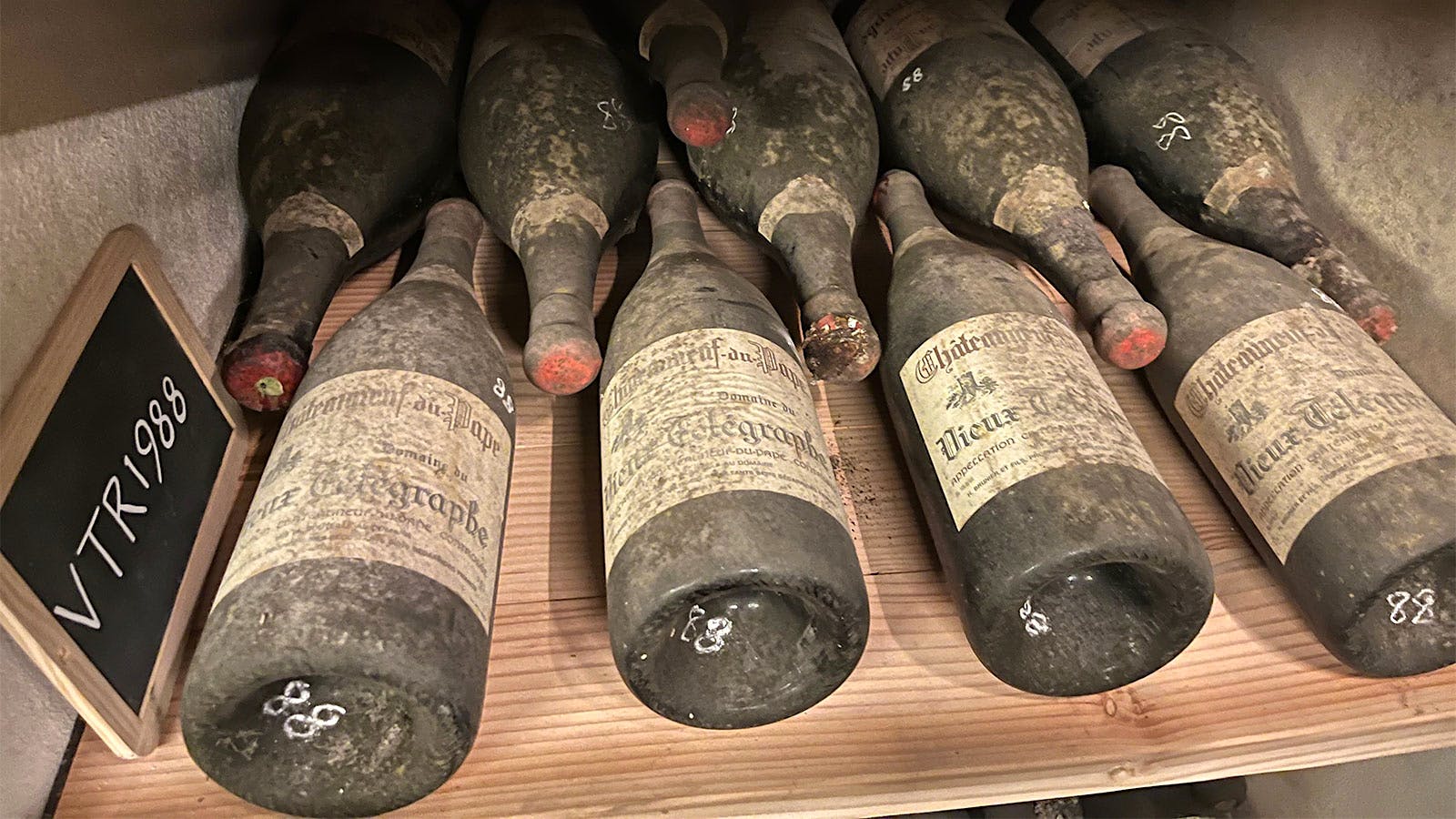
At the end of World War II, Henri Brunier greatly expanded the vineyards and the cellar next to his home in Bedarrides, near the foot of La Crau—a cellar he later converted to a true marvel of careful, gravity-fed winemaking, with access to wood and concrete fermenting vats on two levels.
In the early 1980s, sons Daniel and Frederic took over and expanded with the acquisition of Clos Roquète and Piedlong vineyards for other site-specific wines they produce in the village of Châteauneuf-du-Pape. Then they expanded outside the appellation. In 1998, the brothers created their first partnership, buying and restructuring the Domaine Les Pallières estate in Gigondas with their longtime American importer Kermit Lynch. That same year, they created Massaya in Lebanon’s Beqaa Valley with local partners.
In the last decade, they brothers have turned the keys to it all over to the sixth generation. Daniel’s son, Edouard, manages Châteauneuf -du-Pape vineyards, as well as vinification at Les Pallières. Frederic’s son, Nicolas, runs the winemaking at Vieux Telegraphe, participates at Massaya and handles exports. Frederic’s daughter, Manon, oversees domestic sales.
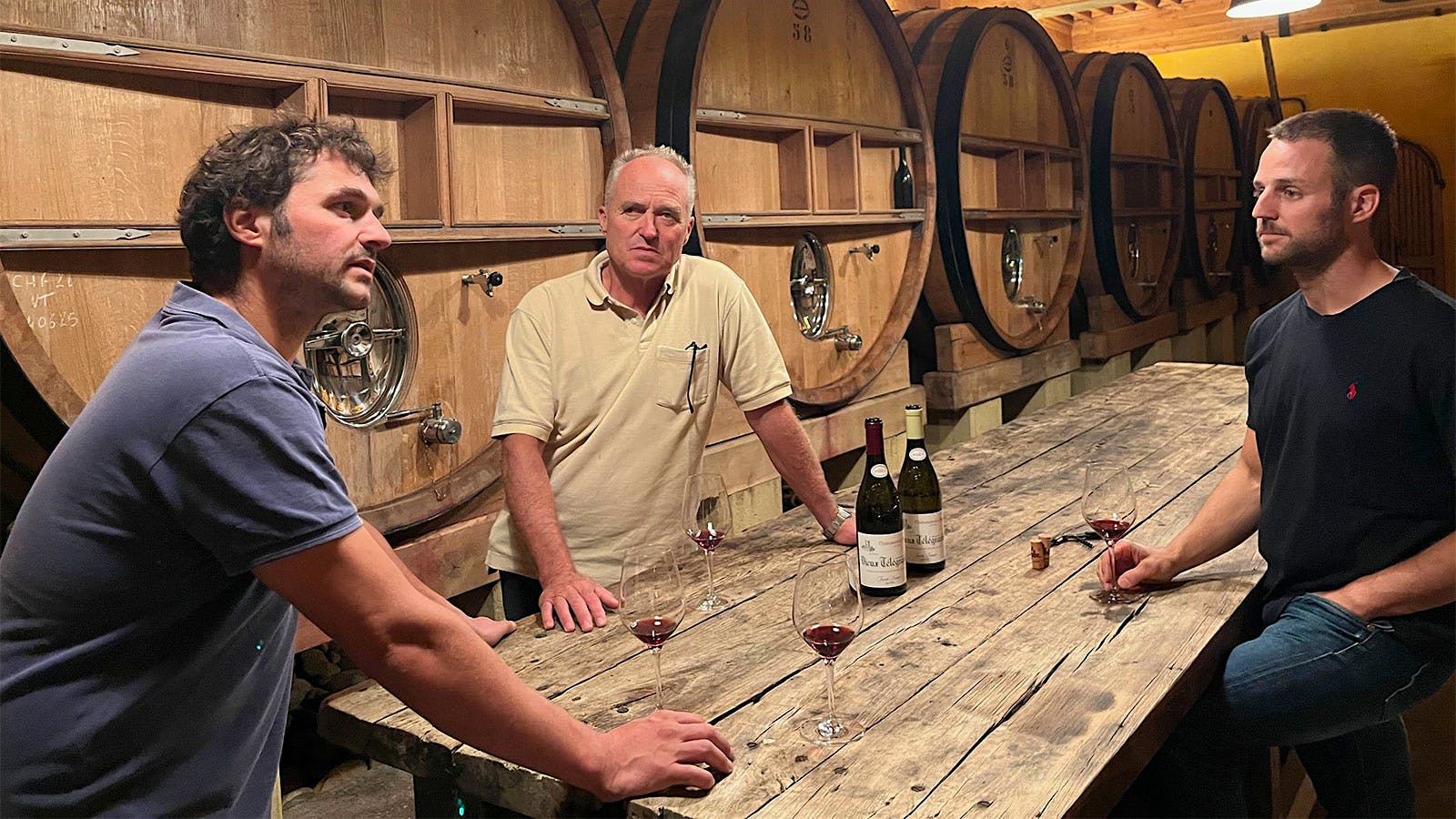
Tasting in the cellar with Edouard, 32, and Nicolas, 35, I’m struck by how steeped they are in Vieux Telegraphe’s rigorous culture.
“We vinify the same way every year,” says Edouard. “If a vintage is concentrated, we let it be concentrated. If it’s light, we let it be light.”
As if completing the thought, Nicolas adds, “What’s important is that it’s balanced and elegant ….”
“… And that it ages and develops with time,” continues Edouard.
“At least 20 years,” echoes Nicolas.
Blending Vieux Telegraphe involves all five members of the two generations. “What’s important is, before the blending, no one tastes the wine but us,” says Edouard proudly.
“Sometimes it can be hard to make a decision,” adds Nicolas. “But we know that if we have a question [the older generation] will have an answer.”
The winery is open for tastings Monday through Friday.
On weekday mornings, between 9 a.m. and noon, complimentary cellar visits and tastings can be reserved by appointment at contact @ vieux-telegraphe.fr
In the afternoons, from 2 p.m. to 5:30 p.m., tastings and sales are available without an appointment.
Vieux Telegraphe
3 route de Châteauneuf-du-Pape
84370 Bedarrides
Phone: +33 (0)4 90 33 00 31